I grew up believing my story was simple.
My father left when I was barely three years old.
That was the explanation I was given, repeated so often it became fact.
He left. He chose to go. End of discussion.
My mother spoke of it with a finality that allowed no questions.
There were no photos of him in our home.
No stories, no memories, no casual mentions.
It was as if he had been carefully erased from our lives.
Whenever I tried to ask about him, she shut it down immediately.
“He made his choice.”
So I learned to accept that answer.
Children do that. We absorb explanations without demanding proof.
I built an image of a man who simply didn’t care enough to stay.
The first crack in that belief appeared when I was seven.
I was taking out the trash when the bag tore open on the kitchen floor.
Among food scraps and crumpled paper, I noticed a clean white envelope.
My name was written on it in neat handwriting I didn’t recognize.
I showed it to my mother.
Her expression hardened instantly.
“Where did you get that?” she asked.
When I told her, she grabbed the envelope from my hands.
“Throw it away.”
“But it has my name—”
“It’s from him,” she said sharply.
“That man doesn’t get to be part of your life.”
She dropped it back into the trash like it was dangerous.
I didn’t argue.
But I stood there long after, staring at the bin, wondering what kind of letter could cause so much anger.
Years passed.
When I was twelve, I tried again.
Why did he leave?
Was he cruel?
Had he hurt her?
Her response was immediate and harsh.
“He didn’t want us. That’s all you need to know.”
So I stopped asking.
I accepted the story I’d been given.
I grew up believing my father chose a life without me.
I was twenty-four when everything changed.
It was an ordinary Tuesday afternoon when an unknown number called my phone.
I almost ignored it.
A woman introduced herself softly.
She was my father’s wife.
She told me he had passed away the week before.
The funeral was the next day.
I didn’t understand why I was being told.
Why I was expected to care.
Why this loss felt so sudden and disorienting.
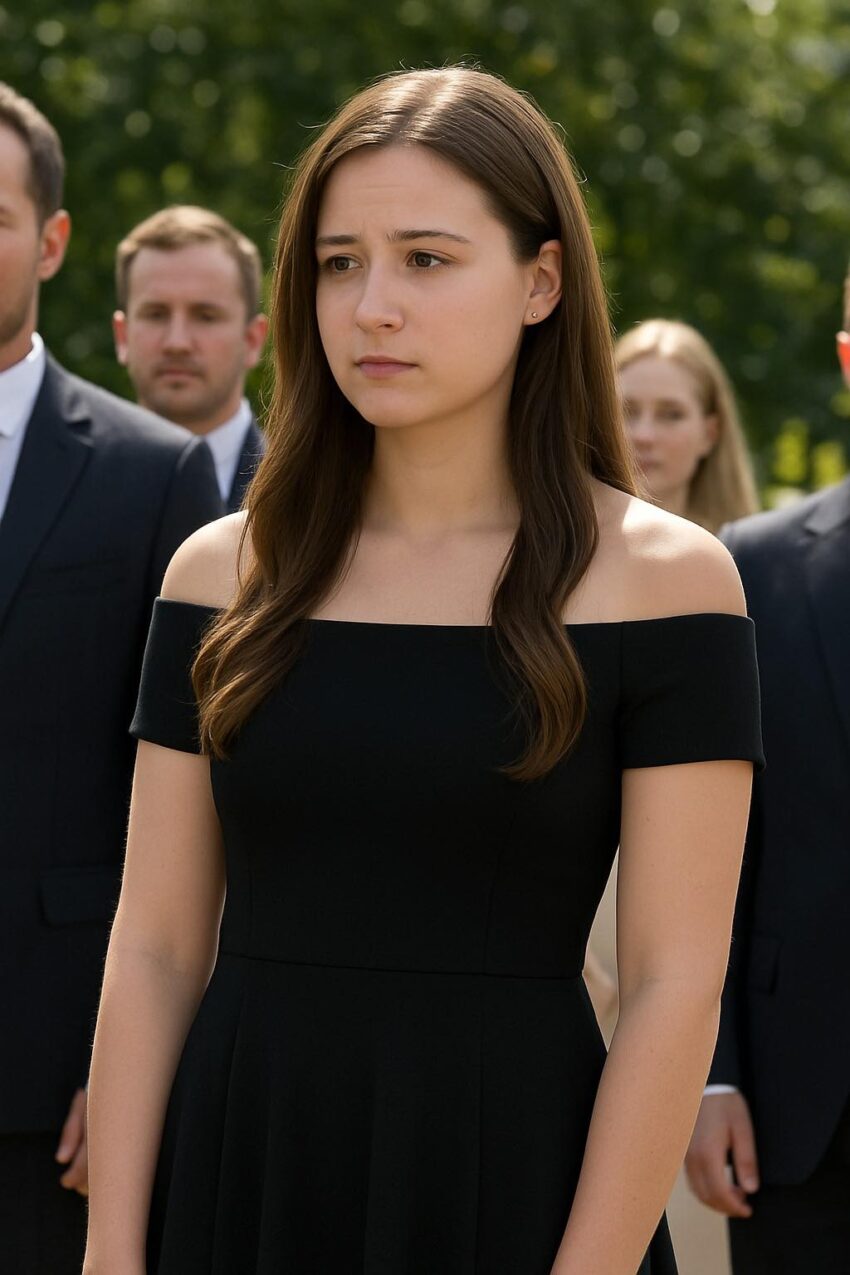
Still, the next day, I went.
I sat in the back of the chapel, unnoticed.
No one questioned my presence.
No one stared.
I was surrounded by people who had known him in ways I never had.
After the service, a woman approached me.
She introduced herself as Ruth.
Her face showed grief, but her eyes were gentle.
She thanked me for coming.
Then she placed a small silver key in my palm.
“He wanted you to have this,” she said.
That key led me to a lawyer’s office.
To a locked box.
To a truth I wasn’t prepared for.
Inside were court documents.
Formal requests for visitation.
Legal correspondence spanning years.
My father had tried.
Repeatedly.
There were no accusations against him.
No claims of danger or instability.
Only resistance.
Then came the explanation.
After the divorce, he had married my mother’s former best friend.
Ruth.
The next items were letters addressed to me.
Birthday cards.
Gifts.
All unopened. All returned.
Finally, there was a letter written just for me.
In it, he said he had loved me every day of his life.
That he hoped what he left behind might help me build something meaningful.
I cried harder than I ever had before.
Later, Ruth invited me to see their home.
She showed me a small room at the end of the hall.
Inside were pieces of my life.
Photos, school memories, items I thought were lost forever.
Proof that he had followed my journey from a distance.
He had called it his “hope room.”
In the weeks that followed, something unexpected happened.
I formed a connection.
With Ruth.
With my half-siblings.
They told me stories about him.
His habits.
His laughter.
The man behind the absence.
Slowly, resentment softened.
Grief changed shape.
Understanding took its place.
Months later, I returned to that room with a box of my own.
Photos from my adulthood.
Memories he had never seen.
Pieces of my future.
As I closed the door, I finally understood.
He hadn’t abandoned me.
He had been kept away.
And somehow, in losing him, I found a family.
A truth I deserved to know.
A love that had waited years to be discovered.
For the first time, there was no anger.
No confusion.
Only peace.
And a beginning.