Everything changed the day I lost my parents, but I didn’t realize how alone I truly was until I read the will.
I imagined grief would hit me like a crashing wave, loud and overwhelming. Instead, it crept in quietly. An unknown voicemail. A sterile waiting room. Two police officers avoiding my eyes.
My name is Rachel. When my parents died in a car accident last October, my world fell apart. I was nineteen. One moment they had left for dinner, and the next I was standing in a cold hallway at three in the morning, holding a paper cup of coffee from a vending machine, wishing I could rewind time.
After the funeral, the house was unbearably quiet. I expected Dad to call from the garage or Mom to hum in the kitchen. Instead, I barely left my room, microwaving prepackaged meals and feeding the cat. Grief makes the world shrink.
Then came the reading of the will.
I showed up wearing rented black slacks and a blazer still carrying my mother’s perfume. My hands trembled, and I twisted the hem of my shirt as if it were a lifeline.
Aunt Dina sat across from me. My dad had never spoken well of her, but she was his sister. Her tight red dress looked more suited for a cocktail party than a legal hearing. She didn’t shed a tear—not even for appearances.
The lawyer cleared his throat. “According to the will, the house is left to Ms. Dina.”
I blinked. “Excuse me… what?”
As if she had just swallowed a canary, Dina grinned. “You heard correctly.”
I trembled. “That’s impossible.” She hated my mother, yes, but my parents would never… She barely spoke to us.
The lawyer shifted uneasily. “This is what’s on record. The signed will appears legitimate.”
The air seemed to drain from the room. “There must be a mistake.”
“There is no mistake,” Dina said, reclining as though the house already belonged to her. “It’s mine now.”
I left the office in a daze, replaying every memory of my parents, hoping someone would call to clarify. No one did.
Two days later, she knocked.
In pajamas and fluffy socks, I opened the door. She didn’t bother with small talk.
Arms crossed, she said, “You have one day to pack and leave. I want the place ready for me.”
My heart sank. “Dina, I have nowhere else to go.”
She shrugged. “Not my problem.”
“I’m your niece.”
“Correction,” she said, brushing past me as if she owned the floor. “I am your landlord. Now leave.”
I tried to argue. I promised to help with expenses, get a job—anything. She just plopped on the couch and rolled her eyes.
“Can you move? You’re blocking the TV.”
So I packed.
That night, sleep eluded me. I folded clothes, wrapped picture frames in towels, every room filled with memories: the scent of cinnamon, birthdays with homemade cake, Mom dancing in the kitchen, Dad teaching me to ride my bike in the backyard.
Meanwhile, Dina munched chips, watched reruns, and tossed passive-aggressive comments over her shoulder.
“You always had too much stuff.”
“I’m packing as fast as I can,” I muttered, avoiding her gaze.
The next morning was humid and gray. With two suitcases and a wilting peace lily my mother had kept by the kitchen window, I stood on the front steps. My eyes burned, but I held back tears—at least in front of her.
I took one last look at the house I’d always known. Everything felt ghostly: the porch swing, the windows, even the cracked road leading to the mailbox.
That’s when I saw it.
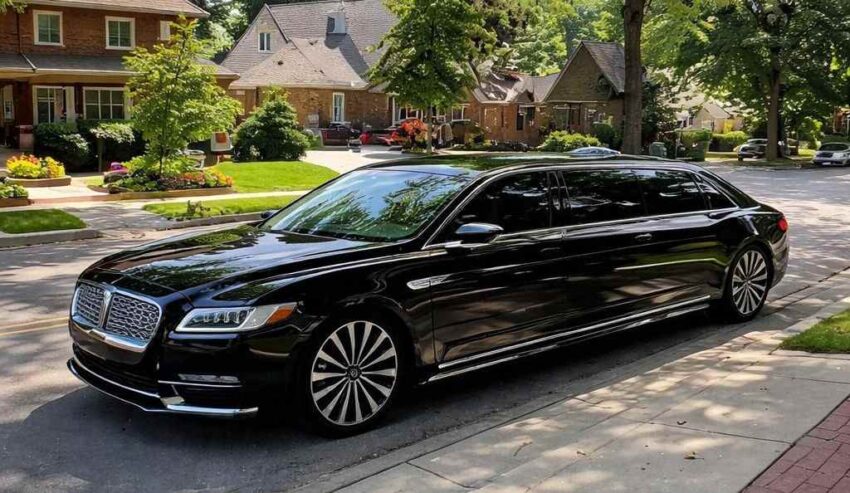
A sleek black limousine rolled to a stop right in front of the house.
I frowned. Dina certainly didn’t have limousine money—unless there were hidden perks to cheating her late brother.
As I walked down the driveway, the door cracked open.
“Rachel?”
I froze.
A tall man stepped out, wearing a gray suit, perfectly groomed hair, and an air of quiet authority. He straightened his tie and met my gaze.
Uncle Mike? “Is that you?”
I was stunned.
His smile softened. “You’ve grown, kiddo. You were still doodling cats with glitter when I last saw you.”
I laughed despite myself. “And I was eleven when you gave me a fountain pen for Christmas. I thought it was a magic wand.”
He chuckled. “Almost. This time, I brought a different kind of magic.”
Still uncertain, I asked, “What are you doing here?”
Mike pulled out his phone. On the screen was a photo that made my stomach drop: Dina standing smugly at our front door, wearing that hideous leopard scarf and oversized sunglasses, captioned: “Fresh starts! Finally getting what was meant for me.”
I clenched my fists. “She posted that?”
Mike slipped his phone into his pocket. “I saw it last night. If your dad had seen it, he’d have lost it. So I started investigating.”
Two police cars arrived at the curb before I could react.
Mike stayed calm. “Stay close. Everything’s going to be okay.”
We approached the house like a solemn procession. I gripped the peace lily; its petals trembled in the wind.
Dina opened the door in a silk robe, mimosa in hand. “Rachel? What—”
“Don’t finish that sentence,” Mike said, raising his hand.
He showed the officers a large folder. “This is evidence that Ms. Dina forged a will. The signature came from a medical consent form, and the document was created after your father’s death.”
“What?” I could barely breathe.
Mike continued, “We have witness statements, handwriting analysis, bank records. Everything is documented.”
Dina sputtered, “This is absurd!”
“We have proof,” Mike said firmly.
The officers handcuffed her. She spilled her drink over her pink slippers.
I stood there. No triumph, no anger—just a strange relief, like finally exhaling after holding my breath too long.
Uncle Mike sighed beside me. “Rachel, you’re not alone. Never.”
Three months later, the court confirmed that my parents left no will. Legally, the house was mine. Everything Dina claimed vanished.
Uncle Mike also sued her for fraud and legal fees. She lost everything.
Me? I’m home.
The peace lily bloomed again.
Uncle Mike visits sometimes, bringing odd little gifts. He even helped fix the dripping faucet. “Rachel, you’re stronger than you think. Your dad would be proud.”
I still miss my parents every day. But I’m learning to rebuild, to create a future, not just a house.
The peace lily, by the window, remains.