Here is something nobody tells you about building a restaurant from nothing: the hardest ingredient is not money, and it is not location, and it is not the menu, though the menu will cost you more sleep than any of those things combined.
The hardest ingredient is knowing who to let into your kitchen.
My business partner Nina told me that once. We were signing the lease on a gutted warehouse in Charleston with forty-two thousand dollars between us, no backup plan, and a concept I had been refining on cocktail napkins for six years. I thought she was talking about hiring, about vetting line cooks and sommeliers and making sure nobody showed up hungover on a Saturday when we had a full house and a journalist at table four.
She was talking about my father.
I didn’t understand that at the time. I understand it now, standing in my own kitchen at two in the morning with an apron I kept folded in a car’s glove compartment for eleven years, finally hanging it where it was always supposed to be: on a hook by the back door, next to Marco’s jacket and Nina’s umbrella and Luis’s baseball cap, in plain sight, in the only room that ever knew what I was worth.
The evening started at five-fifteen, the way all bad evenings start, with something ordinary that refuses to stay ordinary.
I was walking the floor one last time before service, adjusting a candle that did not need adjusting, running my thumb along a table edge for invisible dust, doing what I always did before we opened: looking for the thing that was not quite right so I could make it right before forty-seven people arrived expecting something perfect. Lark and Laurel seated eighty-four and on Fridays we turned tables twice. Every detail mattered. Every fork angle. Every napkin fold. I ran my kitchen the way some people run operating rooms, with precision and a little fear and the understanding that one wrong move could ruin someone’s entire night, and someone had chosen this for a special occasion and would remember it forever, and the memory they carried out would be shaped in part by whether the candle was an inch too far left.
I was straightening the wine list at the host stand when the reservation screen caught my eye.
Table Twelve. Seven-thirty. Party of six. Carter. Sutton’s birthday.
My hands stopped moving. Not a dramatic freeze. More like the moment you pull dough from the refrigerator and realize it has gone cold all the way through, dead and unworkable, and you can warm it back up but it will never rise the same way again.
I called Nina. She picked up before I said anything meaningful.
“They booked a table,” I said. No greeting. She didn’t need one.
“Do they know it’s yours?”
“They found it on a best-of-Charleston list. They don’t know because they never asked.”
I could hear her choosing words the way she chose investments, carefully, with an exit strategy already in hand.
“Elise. Don’t go out there.”
“She’s my sister.”
“And this is your restaurant. Pick one.”
I should have picked one. Looking back, that was the fork in the road, the moment where one version of me puts on her chef’s coat and stays in the kitchen and lets Table Twelve be just another Friday reservation. That version of me goes home at midnight with tired feet and clean hands and a family that remains a safe distance away.
But I have never been good at picking one.
I told Marco, my head chef, that I was stepping off the floor for the evening. Personal matter. He looked at me the way he always looked at me when I mentioned my family, like a man watching someone walk toward a stove they had already been burned on.
You sure, Chef?
I changed in my office. Black dress, closet hook, kept for exactly these situations: the ones where I needed to look like a guest in my own building. The zipper stuck halfway, and I stood with my arms bent behind my back for ten seconds wrestling with it, thinking this was probably a metaphor for something I didn’t want to name.
My father sat at the head of the table because of course he did.
Frank Carter, fifty-eight, retired insurance adjuster, wearing the navy blazer he wore to every restaurant and every funeral, every occasion where he wanted people to know he had made an effort. His jaw was set the way it had been set my entire life, like a man who had already decided how the evening would go and was simply waiting for everyone else to catch up.
Sutton was beside him. She was turning twenty-seven that night, with the particular effortless shine of someone who has never had to build anything in the dark, and she was laughing at something, her head tilted, and for half a second I saw our mother in the angle of her neck, quick and sharp like nicking your finger on a mandoline before you have registered the cut.
Aunt Janine was at the far end. The same oatmeal cardigan from three Thanksgivings ago. She looked up when I approached and something moved across her face that I could not name, something like a door opening in a room that had been closed so long the hinges had rusted.
Sutton saw me first and did not look up from her phone. “Oh, you made it. There’s a chair at the end.”
There was always a chair at the end.
The first twenty minutes were not terrible. That is the trick with my family. The first twenty minutes never are. It is like the first bite of something that has been sitting out too long: the surface tastes fine, and the rot is underneath, and you do not notice until you have already swallowed.
The conversation moved the way it always moved in my family, in concentric circles around Sutton. Her promotion to senior office manager at the dental practice. Her boyfriend Trevor’s new truck. Each topic arrived, was admired, and was replaced by the next, like courses at a tasting menu where every plate looked different but tasted exactly the same. I listened and nodded in the right places and laughed when the table laughed. It was a performance I had been rehearsing since I was old enough to understand that some seats at the table came with speaking parts and some came with instructions to smile.
When the entrées came, the universe did the thing it occasionally does, which is to arrange itself into something so precisely cruel that it stops feeling like coincidence and starts feeling like a point being made.
Sutton had ordered the Laurel.
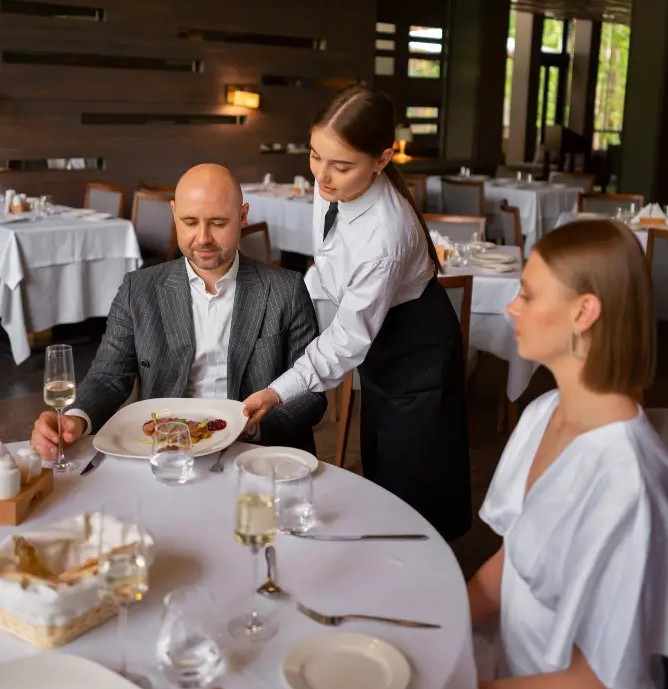
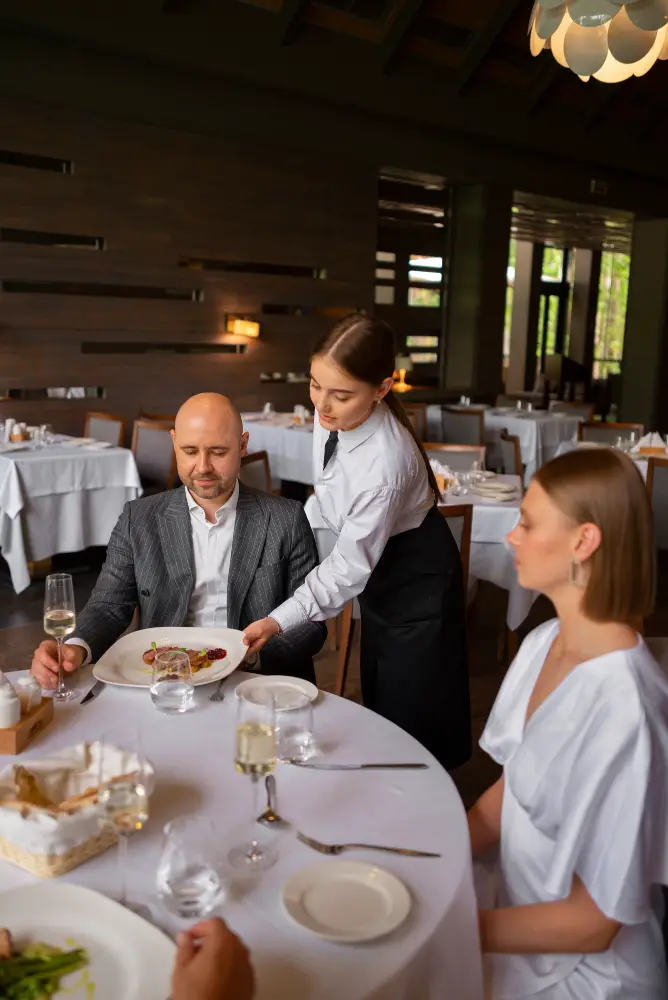
My server set the plate in front of her with the care my team gave every dish: precise, angled, the sauce pooled just so. And there it was. My mother’s crawfish étouffée, refined and reimagined into something that had made a food critic use the word transcendent in print. The recipe Lorraine Carter née Guidry taught me on a Sunday afternoon in our Summerville kitchen when I was nine years old and she was still alive and the world smelled like butter and bay leaf and the specific kind of safety that only exists when your mother is standing next to you at the stove.
Sutton closed her eyes over the first bite. “Oh my God. Dad. You have to try this.”
Frank leaned across and took a forkful and chewed and nodded the way he nodded at things that were acceptable but not worth discussing.
“Not bad.”
My mother’s recipe. My hands. My restaurant. Three years of four a.m. payroll panic and burned forearms and a menu I had rewritten forty-one times until the dish was exactly what I needed it to be.
Not bad.
On the back of our menu, the part nobody reads, there is a small line of text. Black on cream. Easy to miss. Chef Elise Carter, co-owner. Frank set the menu down without turning it over. He had never been a man who read the fine print.
Sutton’s friend, the one with the oversized earrings, turned to me. “So what do you do, Elise?”
The table shifted. Not physically. The way a kitchen goes quiet in the half second before a pan catches fire.
Sutton got there first.
“She’s a cook somewhere downtown.” A wave of the hand. Not dismissive so much as automatic, the way you swat a fly without checking if it is a butterfly. “It’s cute. She’s always been into the food thing.”
The food thing.
The same two words my father used when I was fourteen and holding a trophy nobody came to see me win. The same words that had followed me out of Summerville and into a dishwashing station in New York, through six years of line burns and knife cuts and the kind of exhaustion that lives in your feet and the part of your brain that stops dreaming because there is no time.
I gripped my water glass. Not the way you grip something you are about to drink. The way you grip a knife handle when the oil is spitting and you need to stay completely still, because any movement, any flinch, and you burn.
“Yeah,” I said. “The food thing.”
Aunt Janine was watching me from across the table. Not through me or past me or around me: at me. The way you look at a pot that has been on too long and everyone else in the kitchen is ignoring the sound. I looked away, because if I held her gaze something in my chest was going to crack, and I had not come here to crack.
I had come here to prove to myself that I could take it.
That was the problem. I was so good at taking it that everyone assumed there was nothing to take.
I made it through the gifts. Sutton opened each one with performance-grade gratitude. A designer bag from Frank, tissue paper crinkling like it cost money to touch. Earrings from the friends. A candle set from King Street.
I had brought a small box wrapped in brown paper, done in my office between service prep and the quiet understanding that this whole evening was probably a catastrophic mistake. Inside was a leather-bound journal, hand-stitched, cream pages, a single laurel branch embossed on the cover. On the first page I had written my mother’s crawfish étouffée recipe in a careful hand that took me four tries to approximate, because Lorraine Carter’s handwriting had a specific slant, a leftward lean, like every letter was reaching for something behind it.
Sutton looked at it.
“You got me a notebook?”
“It’s Mom’s recipe. The one she used to make on Sundays.”
“I don’t cook, Elise. You know that.”
She placed the journal beside the designer bag without reading the inscription inside the cover, which said: For Sutton, so you’ll always have a piece of her. Love, Elise. Aunt Janine’s hand tightened on her napkin across the table and her knuckles went white, and that was the loudest sound she made all evening.
What broke the last of my composure was Sutton’s friend, the one with the earrings, groaning over another bite of the Laurel. Seriously, she said, I would come back here every week just for this.
I should have let it go. I know that now. But there is something about hearing a stranger praise your mother’s recipe while your mother’s other daughter tosses the handwritten version aside like junk mail, and the something loosened in my throat before I could retighten it.
“It’s a family recipe,” I said.
Sutton’s fork stopped.
“Can you not make everything about you for one night? It’s my birthday, Elise. One night. You always do this. You show up with your sad little gift and your weird comments and you make everyone uncomfortable and then you act like you’re the victim.”
The table next to ours went quiet first. Then the one behind it. Ripples from a stone nobody saw drop.
Frank’s hand was flat on the table. I had seen that hand a thousand times, on insurance paperwork, on the arm of his recliner, but I had never seen it the way I saw it now: coiled. Deliberate. The physical expression of a decision being made in the space between one breath and the next.
“Drop it,” he said. The voice that does not need volume because it carries weight instead.
“Dad, I wasn’t trying to—”
Sutton’s voice cracked through the dining room like a plate hitting tile. “You’re ruining my birthday!”
Thirty-eight guests. Forks paused. A sommelier stopped pouring.
Frank leaned across the corner of the table and hit me.
Open palm, right cheek, not hard enough to knock me sideways but hard enough for the sound to carry, a flat sharp crack that reached table six and the host stand and the kitchen door that was already beginning to open on the other side. Hard enough for the couple at table six to gasp.
“Get out,” he said. “Now.”
I did not get out. I did not move at all.
The sound came first, then the heat spreading from the cheekbone outward like something blooming under the surface before it is visible. Then the taste of copper, thin and bright, where my teeth had caught the inside of my cheek. Then the room tilting: not physically, but the way a room tilts when every fixed point shifts a quarter inch and nothing lines up anymore.
Tears came. Not the kind you choose. The involuntary kind, the body’s reflex, the same way your eyes water when you chop an onion. Not sadness. Just nerve endings doing what nerve endings do when someone who was supposed to protect you becomes the thing you need protection from.
Sutton looked at me, and her face did not soften.
“See, Dad?” Quiet now. Almost gentle. As if the screaming had never happened. “This is what she always does.”
Aunt Janine stood up, then sat back down, then stood again, her body unable to decide, having sat at this table for fifty-four years and found standing to be a language she had forgotten how to speak.
The kitchen door opened.
Marco came through it the way he came through every door: without hurry, without hesitation, still in his whites. He walked directly to me, stopped, and did something I had never seen in twelve years of knowing him. He straightened his posture, lowered his chin, and bowed. Not theatrical. The kind of bow that exists between people who understand rank. Quiet. Deliberate.
“Miss Carter,” he said, pitched to carry exactly far enough. “Are you all right? Should I cancel their reservation?”
What happened to the room in the following seconds is difficult to describe accurately. The silence did not arrive because it was already there. What changed was the silence’s quality, the way it shifted from the embarrassed look-away silence of strangers witnessing something ugly to something alert and recalibrating, the way a dining room shifts when it understands it has been reading the room wrong.
Frank’s mouth opened. Closed. Opened again. A man who had been reading a map upside down and just realized the destination was behind him.
“What did you call her?”
Marco kept his eyes on me. Behind him, two more of my team had appeared at the kitchen doorway. Luis with a towel over his shoulder. Kemi with her arms crossed and the expression of someone doing math on a problem with no good answers. Dana the sommelier had drifted closer, positioning herself the way staff positions themselves when they are protecting the house, which in this case was the same thing as protecting me.
Sutton leaned forward. “Why is the chef talking to you?”
“Yes,” I said.
Quiet. No triumph. No stage. Just a fact, the way you deliver a dish that speaks for itself.
“This is mine.”
Sutton’s face moved through something I could not have staged if I tried: confusion, genuine and unstaged, then disbelief, then the rapid mechanical recalibration of a woman composing the Instagram caption while the evening was still happening. My sister owns this place! So proud of her!
“Since when?” she said. Then: “Why didn’t you tell us?”
And there it was. The question that contained, inside it, every question they had never asked. Every dinner they had not invited me to where someone might have said, what is Elise up to these days? Every Thanksgiving where the conversation circled Sutton like a drain and nobody thought to redirect the current.
“You never asked,” I said.
I watched the words land. I watched Frank sit down slowly, like a man whose legs had filed a formal complaint. I watched Sutton open her mouth and close it twice. And I felt the thing I had been expecting to feel, the thing I had been working toward through eleven years of dishwashing stations and line burns and a soft opening where only fourteen people showed up and Nina and I sat at the bar afterward drinking cheap bourbon.
I expected relief. I expected the particular satisfaction of a long-held truth finally spoken in the right room.
Instead I felt nothing much.
That is the thing nobody tells you about the moment you have been waiting for your whole life. It tastes like nothing. The plate is beautiful and the presentation is exactly right, and then you take a bite and there is no seasoning, no depth, just surface. Because they were not sorry they had hurt me. They were sorry they had not known I mattered. And those are two completely different dishes, and only one of them would have fed me.
They left around ten-thirty.
Sutton hugged me at the door with the expertise of someone who understands that physical affection can function as a form of contract negotiation. Frank patted my shoulder and said they would talk more soon, which is what people say when they mean the opposite.
Aunt Janine hung back. She touched my hand, just her fingertips against my wrist, light as a garnish, and said nothing. Then she followed them out.
She had placed the recipe journal back on Table Twelve, closed, with the inscription page facing up.
I locked the front door. The last of the staff filtered through the back. Marco squeezed my shoulder on his way past. I’ll be at Ember tomorrow if you need me, he said, which was his way of saying I’ll be close if you fall apart and need someone who knows where the pieces go.
At one forty-seven in the morning I was sitting on the kitchen floor with my back against the walk-in cooler. The stainless steel was cold through my dress. The cooler hummed behind me, the low steady vibration that runs all night whether anyone is there to hear it.
I called Nina.
She picked up on the second ring and did not ask why I was calling at that hour, because she had been waiting for this call since seven-thirty.
“They want to come back,” I said. “Monthly dinners. Sutton wants me to cater a wedding. My dad said my mom would have loved this place.”
“Your mom did love this place,” Nina said. “She’s in the recipe. She’s in the name. She’s been here since day one. She didn’t need a reservation and a four-thousand-dollar dinner to show up.”
I pressed my palm flat against the cold tile.
“They didn’t find your restaurant because they were looking for you,” Nina said. “They found it on a list. They still weren’t looking. And the fact that they’re impressed now doesn’t mean they see you. It means they see the building. They had twenty-nine years to see you, Elise. The only thing that changed tonight is the price tag.”
I hung up. Not because she was wrong. Because she was right enough that holding the phone felt like holding a mirror too close to my face.
The walk-in hummed. The amber light from the hood range held steady. And I let the silence do what silence does when you finally stop filling it with hope.
It tells you the truth.
By eight the following morning I had made a decision, sent the text, and was sitting at Table Twelve with two things in front of me: the recipe journal and a business card I was not going to leave out.
The dining room was empty and the south wall was glass and it was transparent now, not reflective, no mirrors in this morning light, just the room and what was actually in it.
Frank arrived first. He looked like a man who had not slept either, which gave us something in common for the first time in years. He was wearing the blazer again, buttoned correctly this time, carrying the stiffness of a person who knows he is walking into something he cannot adjust.
Sutton was two minutes behind him. No makeup, hair pulled back, closer to the girl I remembered from before all of this, the one who sat on the kitchen counter while Mom cooked and swung her legs against the cabinets. I pressed that image down. It did not belong here.
They sat across from me.
I did not plan a speech. I spoke the way I cook: clean, precise, nothing wasted, every element on the plate because it earned its place there.
“Dad, when I was fourteen, I won a state championship. You weren’t there. When I was accepted to the best culinary school in the country, you tore up the letter. When I left home at eighteen with one bag, you didn’t call for three months. When I opened this restaurant, you didn’t know because you never asked. And last night, in a room I built with my own hands and my mother’s recipe, you hit me because Sutton said I was ruining her birthday.”
Frank’s mouth opened. I told him I was not finished. He closed it.
And for the first time in my life, my father waited for me to speak.
I pushed the recipe journal across the table.
“That has Mom’s handwriting in it,” I said. “Her étouffée. The recipe she taught me when I was nine. The dish that became the reason a food critic used the word transcendent about my cooking, the dish Sutton ate last night and called the best thing she had ever tasted. The dish you called not bad.”
I looked at Sutton.
“The one you set aside without reading the first page.”
She looked at the journal. Then at me. Then at the table. She did not reach for it.
“Mom was a cook, Dad,” I said. “She taught me my first recipe. She is the reason this restaurant is called Lark and Laurel: lark for the bird she loved, laurel for the bay leaf she put in everything. She is in every dish on that menu. And you forgot. Not her. You did not forget her. You forgot that she gave this to me.”
Frank reached into his jacket and produced a wallet photograph. My mother, young, in the Summerville kitchen, apron on, laughing at whoever was holding the camera, which was probably him, back when he was the kind of man who made his wife laugh.
He looked at the photograph. Then at Sutton. Then at me. And I saw it. The thing I had spent twenty-nine years not understanding.
He was not looking at Sutton because she was better. He was looking at her because she had Lorraine’s eyes, the same tilt when she laughed, the same way of turning her head when someone said her name. Sutton was the living negative of a photograph Frank could not stop developing. And every time he looked at her, he saw the woman he had lost.
I looked like Frank. Same jawline, same hands, same way of standing in a kitchen like it was the only room that made sense. And every time he looked at me, he saw himself, and himself was a man who could not save his wife from cancer and could not forgive the world for taking her.
This did not excuse anything. Not the empty seat at the state championship. Not the torn letter. Not his hand on my face in my own dining room.
But it explained the architecture of a house built on grief and maintained by habit. It explained why one daughter got the sunlight and the other got the basement.
Frank’s voice broke. Not dramatically. A small crack, like a glass that has been holding hot liquid too long.
“I didn’t mean to.”
“I know,” I said. “But meaning to and doing are two different recipes, Dad. One is intention. The other is what people actually taste.”
Sutton had not spoken. She was staring at the journal. The performance was offline in a way I had not seen before, the calculation paused, just Sutton in a chair without a script for the first time since she learned there was an audience.
“At least I stayed,” she said.
Not loud. Not an accusation. Something smaller and truer that had been sitting in her chest for years, waiting for a room quiet enough to come out.
Because Sutton stayed and got the love. But I left and got the life. And she knew, had perhaps always known, that the love she had been collecting was secondhand. Borrowed light. A reflection of a woman who was not here anymore, projected onto a daughter who happened to have the right face.
“You stayed because it was comfortable,” I said. “I left because it was survival.”
She opened her mouth and the old machinery started, the guilt play, the you abandoned us, the familiar choreography of deflection she had learned from watching Frank avoid hard conversations for three decades. But the words came out wrong. They landed on the table like garnish on an empty plate, arranged and colorful and fooling nobody.
She closed her mouth.
And that was the most honest thing my sister had ever done.
I stood. I took the business card off the table and put it back in my pocket. I had spent eleven years building something, and I was not going to place it out for people who needed a best-of list to find it.
“I am not cutting you off,” I said. “But I am not cooking for this table anymore. If you want to know me, the real me, not the restaurant and not the chef and not the price tag, you know where I am. But you come as guests in my life, not as people I have to audition for.”
I walked to the kitchen door and turned back.
“The reservation book is open,” I said. “But the kitchen is mine.”
Then I went through the door and let it swing shut behind me.
The kitchen was empty and clean and smelled like the lemon sanitizer the night crew used on the steel. Morning light came through the back window and hit the prep station at an angle that turned the stainless steel soft, almost warm.
I did not look through the porthole window to see if they were still sitting there. I did not need to.
Three weeks later on a Tuesday night after the last table cleared, Marco opened a bottle of red that cost eleven dollars and poured it into the same glasses we used for the eighty-dollar Barolos, and I made pasta. Not the kind that goes on a menu. Not the kind with a French name and a sauce that takes four hours. Just garlic and olive oil and chili flake and a handful of parsley from the herb box by the back door, the kind of food you make when the kitchen belongs to you and nobody is keeping score.
Luis sat on an overturned milk crate with his plate on his knee. Kemi had made something with chocolate and sea salt that she refused to call dessert because it had not been properly tempered, but she ate two pieces anyway. Dana put music on from her phone, something slow and acoustic that moved through the kitchen like steam. Nina sat on the prep counter with her legs swinging, answering emails between bites, because Nina did not know how to stop working and I had stopped asking her to.
Someone told a joke. I do not remember the joke. I remember Marco’s groan, theatrical and full-bodied, the kind that is itself a form of laughter, and Luis nearly choking on bread, and Kemi shaking her head and saying that is the worst thing I have ever heard while already laughing.
This is what a family dinner sounds like when nobody at the table is keeping score.
My phone rang and the name on the screen was Aunt Janine and I stepped into the hallway.
Her voice was different. Not louder, because Janine would never be loud, but less folded. Like a napkin someone had finally smoothed flat.
“I should have stood up that night at the table. When he. I stood up and sat back down.”
“I know.”
“I’ve been sitting back down my whole life.”
I leaned against the hallway wall and let the kitchen noise come through the door behind me: laughter, the clink of glasses, someone arguing about whether cilantro was genetic or a choice. The sound of people who had chosen each other.
“I saw the menu online,” Janine said. “The étouffée.”
“Lorraine’s recipe. We call it Laurel.”
A pause so long I could hear her breathing.
“She would have been there for everything, Elise. Every competition. Every opening night. She would have been the one at the table nobody could shut up.”
I laughed. A real one, the kind that comes from a place you forgot existed because you had been storing grief there so long you mistook it for empty space.
“You sent me eight hundred dollars when I was sleeping on a kitchen floor in New York,” I said. “You wrote for the cooking thing in the memo line.”
“I didn’t know what else to write.”
“It was perfect, Aunt Janine.”
She was quiet. Then: “Can I come see it? Not for a special occasion. Just a Tuesday.”
“Tuesdays are when we make the good pasta.”
“Then a Tuesday.”
After I hung up, I went to my car.
The parking lot behind Lark and Laurel was empty except for Marco’s truck and Nina’s sedan. The Charleston air was warm with jasmine and the distant salt edge of the harbor, the smell of a city that had been here long before me and would be here long after, indifferent and beautiful.
I opened the glove compartment.
The apron had been folded in there for years. White cotton, thin as paper now, grease-stained near the left pocket. I had carried it through three apartments and across state lines and through every day of building something the girl who wore it could never have imagined. I had kept it hidden, taken it out only when I was alone, and I understood now that keeping it in the dark was its own form of agreement, another way of saying that what I was and what I had made belonged in a glove compartment rather than on a wall.
I took it inside.
Walked through the kitchen, past the laughter and the cheap wine and Kemi’s improperly tempered chocolate, and hung it on the hook by the back door, next to Marco’s jacket and Nina’s umbrella and Luis’s baseball cap.
Not hidden. Not a secret. Just an apron in the kitchen where it had always belonged.
I closed the restaurant the way I always did, section by section, light by light. The dining room went dark first, then the bar, then the hallway. The kitchen was last, because the kitchen is always last.
I stood in the doorway and looked at the room.
Table Twelve was set for tomorrow. Fresh linen. New candle. A menu with my name on the back in small black type that nobody had to read to know I was here, because the dish that came from my mother’s kitchen and my own hands was reason enough.
The girl who stood on that stage at fourteen holding a trophy while the bleachers emptied had been waiting for a specific kind of seeing, the kind that required the person doing the looking to understand what they were looking at and to have always been paying attention. I waited for it through the dishwashing station and the line cook years and the lease on the gutted warehouse and the forty-two thousand dollars and the six-week wait list.
It never came from the people I had built the guest room for.
And the table had been full all along.
I turned off the kitchen light. Locked the back door. Walked to my car with jasmine in the air and an apron on a hook where it could finally be seen.
The kitchen would be there tomorrow, and the pasta would be good, and Aunt Janine was coming on a Tuesday.
That was enough. That was, it turned out, more than enough.