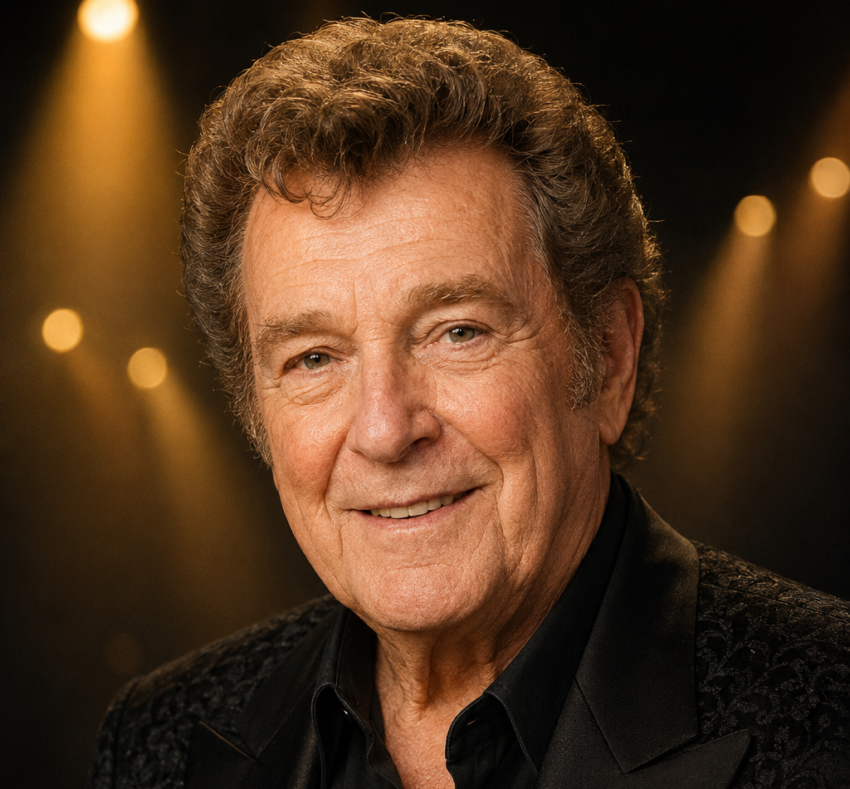
Freddy Cannon, ‘Palisades Park’ and ‘Tallahassee Lassie’ Singer, Dies at 89
Freddy Cannon, the energetic American rock-and-roll singer whose booming voice powered classics such as “Palisades Park,” “Tallahassee Lassie” and “Way Down Yonder in New Orleans,” has died at the age of 89.
Cannon died on July 17, 2026, at a hospice facility in California following a brief battle with cancer. His death marked the passing of one of the most exuberant performers from rock and roll’s formative years—a singer whose thunderous recordings helped fill dance floors during the late 1950s and early 1960s.
Known affectionately as Freddy “Boom Boom” Cannon, he built his reputation with pounding rhythms, joyful vocal shouts and an unmistakably energetic delivery. His music captured the youthful excitement of an era when rock and roll was rapidly transforming American popular culture.
From Massachusetts to Rock-and-Roll Stardom
Born Frederick Anthony Picariello Jr. in Revere, Massachusetts, Cannon grew up in nearby Lynn. Music was part of his family life from an early age. His father played trumpet, sang and performed with local bands, while his mother enjoyed writing songs.
As a teenager, Cannon listened to rhythm-and-blues artists such as Big Joe Turner and Buddy Johnson. The guitar-driven music of Chuck Berry also had a significant influence on him. He learned to play guitar and began performing with local musicians while still young.
Before achieving national fame, Cannon worked as a truck driver and played at dances and record-hop events around the Boston area. He sang and played rhythm guitar with the Spindrifts, whose recording “Cha-Cha-Do” became a modest local success.
He later formed Freddy Karmon and the Hurricanes, developing the forceful vocal style and stage energy that would eventually become his trademark.
Breakthrough with ‘Tallahassee Lassie’
Cannon’s breakthrough began with a song originally called “Rock and Roll Baby.” Its initial lyrics were inspired by a poem written by his mother, Mimi Picariello.
The song reached producers Bob Crewe and Frank Slay, who revised it and transformed it into “Tallahassee Lassie.” After additional studio work—including prominent drums, handclaps and Cannon’s enthusiastic vocal cries—the record was released by Swan Records in 1959.
The label also gave the singer his new professional name: Freddy Cannon.
“Tallahassee Lassie” climbed to No. 6 on the Billboard Hot 100 and became a million-selling record. It introduced American audiences to Cannon’s highly charged sound and began a successful run of chart appearances.
The pounding drums used on his recordings led to the nickname Freddy “Boom Boom” Cannon—a description that perfectly matched both his music and his dynamic personality.
A String of Major Hits
Cannon quickly demonstrated that “Tallahassee Lassie” was not an isolated success.
Later in 1959, he released a rock-and-roll interpretation of the older popular song “Way Down Yonder in New Orleans.” Cannon’s version reached No. 3 in both the United States and the United Kingdom and sold more than one million copies.
His international popularity grew rapidly. In 1960, The Explosive Freddy Cannon reportedly became the first album by a rock-and-roll singer to reach the top of the UK Albums Chart.
Other recordings—including “Chattanoogie Shoe Shine Boy,” “Humdinger,” “Transistor Sister” and “Muskrat Ramble”—maintained his presence on radio stations and record charts.
However, the song most closely associated with Cannon arrived in 1962.
The Lasting Popularity of ‘Palisades Park’
Written by Chuck Barris, who later created and hosted The Gong Show, “Palisades Park” transformed a visit to an amusement park into a thrilling musical adventure.
The recording included amusement-park sound effects, including the sound of a roller coaster, alongside Cannon’s double-tracked vocals and the powerful beat for which he had become famous.
Released in 1962, “Palisades Park” reached No. 3 on the Billboard Hot 100. It became another million-selling record and one of the most memorable summer songs of the early rock-and-roll period.
The track’s appeal came from its vivid sense of excitement. Cannon did not merely sing about an amusement park; his voice made listeners feel as though they were surrounded by rides, crowds, music and teenage romance.
Decades after its release, “Palisades Park” remained a fixture of oldies radio and rock-and-roll compilations.
A Familiar Face on American Television
Television played an important role in Cannon’s career. He became closely associated with Dick Clark and made numerous appearances on American Bandstand, one of the most influential music programs of its time.
Reports credit Cannon with more than 100 appearances on the show, helping him establish a strong connection with young television viewers across the United States.
After leaving Swan Records, Cannon signed with Warner Bros. Records. He returned to the Top 20 with “Abigail Beecher” in 1964 and “Action” in 1965.
“Action” served as the theme song for Dick Clark’s television program Where the Action Is. The recording involved prominent Los Angeles session musicians, including Glen Campbell, Leon Russell, James Burton and David Gates.
Cannon also appeared in music-oriented films, including Just for Fun and Village of the Giants, extending his presence beyond records and television performances.
Remaining Loyal to Rock and Roll
Although changing musical tastes—including the British Invasion—reduced the commercial prominence of many American performers from the 1950s, Cannon continued recording and performing.
He released music through several labels and became a popular attraction on rock-and-roll revival tours. He also appeared at American Bandstand reunion concerts and performed for audiences around the world.
In 1981, he collaborated with the Belmonts on “Let’s Put the Fun Back in Rock ’n’ Roll,” a title that summarized his enduring musical philosophy. He later recorded seasonal music and continued releasing occasional projects, including songs celebrating the Boston Red Sox and the television horror host Svengoolie.
Cannon never appeared embarrassed by his early rock-and-roll identity. While some singers attempted to distance themselves from their youthful recordings, he continued to embrace the loud, cheerful and uncomplicated excitement that had made him famous.
An Explosive Musical Legacy
Freddy Cannon emerged during a crucial transitional period in American music. Rock and roll was still relatively new, and its artists were developing the sounds, images and performance styles that would influence generations to come.
Cannon’s recordings were built to create excitement. Their pounding drums, handclaps, saxophones, guitars and enthusiastic vocal interjections produced an atmosphere of celebration.
His greatest records were not quiet or restrained. They were deliberately explosive.
That quality made Cannon different from many of the carefully styled teenage singers of his era. He was a genuine rock-and-roll performer who brought commitment and physical energy to every song.
With “Tallahassee Lassie,” “Way Down Yonder in New Orleans,” “Action” and, above all, “Palisades Park,” Freddy “Boom Boom” Cannon created a catalogue that continues to evoke jukeboxes, amusement parks, teenage dances and the first exhilarating years of rock and roll.
His voice may have fallen silent, but the beat behind his most famous recordings remains as joyful and powerful as ever.