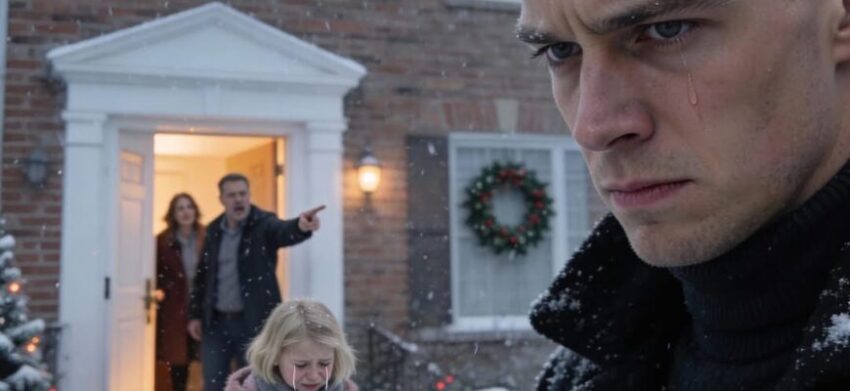
The Night the Door Closed
What I remember most isn’t the argument.
It’s the sound of the door locking behind her.
It was Christmas Eve, long past midnight. Snow had been falling for hours, turning the streets into something quiet and unforgiving. I wasn’t there when it happened. I was driving home from work, radio low, holiday music playing at the wrong time, unaware that my parents had just made a decision that would permanently fracture our family.
My sister June was eleven.
She was small, careful, the kind of child who tried not to be noticed. She said sorry even when she did nothing wrong. She saved scraps of wrapping paper, reused bags, and spent weeks buying modest gifts for everyone with her allowance. She thought kindness was something you earned by being quiet.
That night, she cried.
That was enough for my parents.
They said she was rude. Ungrateful. Disrespectful. What she actually was—was hurt.
They told her to leave.
No jacket. No phone. No destination. Just a thin sweater, a bag of gifts she had wrapped herself, and words that would stay with her long after the cold faded: You don’t belong here.
Later, neighbors admitted they saw her walking alone through the snow. Some watched from windows. Some turned away. No one intervened.
I learned about it at a stoplight when my phone vibrated. I almost ignored the number. June never called me directly.
When I answered, there was silence. Then breathing.
“Can I come to you?” she whispered.
The call dropped.
I didn’t panic. I didn’t rush. Something inside me shut down and focused.
I found her at a small convenience store a mile from home, standing near the machines like she didn’t know where else to go. Her hands were red. Her face was wet. She held the gift bag like proof she still mattered. When she saw me, she didn’t move—she just collapsed forward, exhausted.
I took her home.
She slept in my apartment wrapped in blankets, still clutching that bag. I made her something warm to drink, gave her clean clothes, and let her rest. She slept deeply, like someone finally safe enough to stop bracing.
My parents didn’t call.
At two in the morning, my mother texted:
She’ll come back when she learns her lesson.
I looked at my sister sleeping on my couch and replied with one line:
No. You will.
Then I opened my laptop.
I knew how my parents operated. I’d helped quietly for years—emails, documents, paperwork. I knew what depended on silence and what couldn’t survive scrutiny. I didn’t lie. I didn’t threaten. I stopped covering.
I sent messages. Asked questions. Attached records. Then I filed a formal report. I stuck to facts: time, weather, age, witnesses. Abandonment sounds very different when written plainly.
I called our aunt—the one my mother cut off years ago.
“She threw June out,” I said.
“I was waiting for that call,” she replied.
By morning, the situation had grown larger than my parents could control. Social services arrived. Family members started asking questions. Business relationships paused.
My parents called at sunrise.
“What did you do?” my mother asked.
“I chose my sister,” I said.
They argued. They blamed. Then the line went silent.
June woke up to a crooked little Christmas tree I found at dawn. The lights flickered, but they worked.
“Are they mad?” she asked.
“Yes,” I said. “But you’re safe.”
Temporary custody became permanent.
Healing wasn’t instant. There were nightmares. Long pauses. Fear at raised voices. Then, slowly, laughter returned. She drew again. She slept through the night.
One day she asked, “Do you think they miss me?”
“I think they miss control,” I said. “That’s different.”
She understood.
Our holidays are quiet now. No yelling disguised as tradition. No love with conditions. Doors stay open.
My parents still tell their version. I let them.
I didn’t destroy their lives.
I stopped protecting their behavior.
Family isn’t who shares your blood.
It’s who keeps you safe when the door closes.