I was fresh off a long day in Boston Housing Court when my mother’s name flashed on my phone.
She skipped the greeting.
“You have forty-eight hours to get your things out,” she said. “That house is Stephanie’s now.”
I was standing in the parking garage on Cambridge Street, keys in hand, the particular exhaustion of a full day in court sitting in my shoulders and behind my eyes. I had spent eight hours that day helping a seventy-three-year-old woman fight an eviction from the apartment she had lived in for nineteen years, arguing in front of a judge who had seen too many of these cases to be moved by anything less than airtight documentation, which I had provided. I had won. I was tired. And my mother was on the phone telling me, in the voice she used when she had already decided the conversation was over, that my grandmother’s house belonged to my sister.
I knew this moment would come. I had known it in the specific way you know things you have prepared for without wanting to need the preparation. The house had been mine, legally and unambiguously, for fourteen months. The probate had closed cleanly. The deed had transferred. The property taxes for the current year were in my name. None of these facts had made any impression on my family, who had spent fourteen months treating the legal record as a first draft subject to revision.
“Okay,” I said.
That was all. Just the one word, flat and cooperative and entirely opaque, and then I hung up and sat in my car in the parking garage for a few minutes with the engine off, thinking about my grandmother.
Elaine raised me in the practical, non-theatrical way of women who understand that presence is more useful than performance. My parents were not absent in the categorical sense. They worked long hours, they attended school events when they could, they provided materially for a version of my upbringing that looked fine from the outside. But the interior work of raising me, the daily labor of teaching me how to handle difficult things and how to hold my ground without burning the room down, that had been Elaine. She lived forty minutes outside the city in a house she had owned since 1978, a two-story with a wraparound porch and blue shutters that she and I had painted together when I was twelve, spending a whole Saturday with roller brushes and a radio tuned to the oldies station, getting more paint on ourselves than on the shutters, laughing about it. Her kitchen table was where I did homework and ate dinner and, later, processed the complicated years of my twenties when I was figuring out what I wanted my life to look like.
She had been clear about the house. I want to be precise about this because clarity matters more than sentiment in what follows: Elaine had been clear with me, with her attorney, and in the documented record of her will. The house was mine. Not divided, not held in trust for the family, not conditional on anything. Mine. She had other assets that she distributed to my parents and to my sister Stephanie and to a cousin she had remained close to her whole life. She had thought about it. She had decided. Her attorney, a careful woman named Margaret Osei who had been doing estate work in Massachusetts for twenty-five years, had drawn the will with the kind of precision that leaves no reasonable ambiguity.
My family had, nonetheless, managed to find ambiguity. Or rather, they had decided to manufacture it, which is a different thing and requires more active effort.
My sister Stephanie was three years older than me and had a relationship with property that I can describe most accurately as acquisitive. She wanted things and she was not particularly interested in the distinction between things she had been given and things she felt she should have been given. After the will was read, she had cycled through several positions: the will was unclear, the will was outdated, Elaine had been confused when she signed it, Elaine had meant to change it, Elaine would have wanted things shared, the house was too much for me to manage alone. Each position was held briefly, with conviction, and then abandoned when the documentary record refuted it, at which point she moved to the next one. By the time my mother called me in the parking garage, fourteen months in, the family had apparently arrived at a new and more direct strategy, which was simply to assert that the house was Stephanie’s and give me forty-eight hours to respond.
I drove home and opened the file box.
I keep a file box because I am a housing attorney and I understand, with a precision that most people are fortunate enough not to need in their personal lives, exactly what it means to have the paperwork and exactly what it costs not to. The box was well organized. The deed was on top. Below it were the probate documents with Margaret Osei’s signature and the court’s stamp. Below those were the property tax receipts, the homeowner’s insurance records, the utility account transfers, and a folder containing every communication from my family that had touched on the subject of the house, printed and dated, going back fourteen months.
I spread everything on my kitchen table and took photographs with my phone. Then I called Margaret Osei, even though it was a Saturday evening, because Margaret had told me when the probate closed to call her if anything developed, and I believed her when she said it.
She picked up on the third ring.
I told her about the call. She was quiet for a moment, the kind of quiet that in a lawyer means thinking rather than hesitation.
“What exactly did she say?” Margaret asked.
I repeated it: forty-eight hours, that house is Stephanie’s now.
“And you said?”
“Okay.”
Another brief pause, this one containing something that might have been approval. “Good. Don’t engage with the substance. What do you need from me?”
“I want to know if there’s anything they can actually do,” I said. “Legally.”
“No. The probate closed fourteen months ago. The will was not contested within the statutory period. The deed is in your name. There is nothing for them to do legally. What they appear to be doing is not legal. It is an attempt to intimidate you into acting as if the law doesn’t mean what it says, which is a strategy that works on people who don’t know what the law says.” She paused again. “You know what it says.”
“I do.”
“Then you know what to do.”
I did. I had spent that day in Boston Housing Court doing exactly that work, the work of ensuring that someone’s home remained their home against people who had decided the word ownership was negotiable. I had won that case with documentation and calm and the willingness to let the law do what it was designed to do. I was going to apply the same methodology to my own situation, which was, structurally, not that different.
I called a colleague next, a man named David Chung who had been doing estate and property law for fifteen years and who had the useful quality of being extremely direct.
“Tell me the one mistake I can’t afford to make,” I said.
“Don’t let them get a foot in the door,” he said immediately. “Literal or metaphorical. Once someone has physical possession of a property, even if the law is on your side, the process to remove them is long and expensive and unpleasant. You prevent it before it starts or you spend a year undoing it.”
I thanked him and ended the call.
Saturday morning I drove out to the house in the early light, before traffic, with the radio off and the windows down, letting the cold air from the bay work its way through the car. It was late October, the trees along the highway going orange and yellow, the sky the particular hard blue of New England fall that looks more like a painting than a sky. I had been to the house dozens of times since the probate closed, for maintenance and inspections and once to have the furnace serviced, but I had not stayed there. I had not been ready to be there alone without Elaine in it. Some things take longer than the legal timeline.
The porch boards creaked when I stepped up, the familiar sound of old wood settling under weight. I stood there for a moment with my hand on the door frame, not going in yet, just being present in the specific way you can be present at a place that holds the concentrated memory of another person, the smell of it, the light angle of it, the way it arranges the air differently than other places.
I went inside.
I did not take furniture. Furniture can be replaced and furniture is not, in the end, what makes a house into something worth fighting for. I took the irreplaceable things, moving through the rooms with the focused efficiency of someone who has made a list and is working from it. The photo albums from the living room bookshelf, forty years of documented family life in Elaine’s careful organization. The jewelry box from her dresser, the pieces she had pointed out to me over the years, saying this one was your great-aunt’s, this one I bought the year your grandfather died because I needed something beautiful. The box of handwritten recipes in her kitchen drawer, index cards in her looping script with notes in the margins, more salt than the recipe says, use the good butter, let it rest longer than you think. The small wooden box of letters from the closet shelf, letters she had kept from people she had loved, the kind of record of a life that is irreplaceable specifically because it was not designed to be kept.
I carried everything to my car in careful trips, wrapping the fragile things in the spare fleeces I had brought. Then I went back through the house methodically, room by room, and did what needed doing.
I called the locksmith first. A woman named Gina who I had used before for clients and who was professional and fast and did not ask questions that were not her business. She met me at the house within the hour and changed every exterior lock, front door, back door, the door from the garage into the house, the basement door. She gave me four sets of keys and left.
I called the security monitoring company second. The house had a system that Elaine had installed years ago, one of the ones that sent alerts to your phone when any exterior door opened or when motion was detected in certain rooms. The account had been transferred to me during probate. I changed the access codes and the emergency contact number, set the monitoring level to the highest tier, and made sure the alert notifications were going to my phone and to my colleague David’s phone as a backup.
I called the local police department third, which is the call that requires the most explanation.
I am a housing attorney. I know what the law says about property rights and I know what the law says about how those rights get enforced and I know that the ideal circumstance for the enforcement of those rights is one in which law enforcement has been informed in advance rather than called reactively into an already-escalated situation. I asked to speak to the desk officer on duty. I explained the situation simply: I was the documented legal owner of a property at a specific address, I had reason to believe that individuals who did not have any legal claim to the property were planning to attempt to enter it, and I wanted to create a record of that concern in advance. I provided the officer with my name, the address, the deed reference number, and my bar card information. I told her I did not believe this would become an incident requiring law enforcement response but that I wanted the department to have context in case it did.
The officer was courteous and professional. She made a note. She told me if I needed a response to call the non-emergency line and reference the record number she gave me, or 911 if the situation escalated to anything involving an immediate threat.
I thanked her and drove home.
Stephanie texted that afternoon about curtains. She wanted to know if the living room windows were standard size because she had found a set she liked and wanted to measure. The text had the casual confidence of someone planning a renovation they have already decided is theirs to plan, the kind of message you send when the outcome feels inevitable and the only remaining work is logistics. My father emailed about doing what’s right, the phrase he used when he wanted to invoke moral authority without specifying what he believed the right thing to be, which was a reliable indicator that he knew the factual record did not support his position and was hoping sentiment would cover the gap. My mother left a voicemail about being reasonable, which in the specific register she used it meant accepting a version of events that was convenient for other people.
I did not respond to any of it. I was not being evasive. I was not avoiding difficulty. I was applying the strategy my grandmother had demonstrated to me across two decades of patient and effective living, which was that silence in the face of people who are trying to provoke a reaction is not weakness and is not acquiescence. It is a form of discipline. It says, clearly, to anyone paying attention: your attempt to pull me into a frame of your choosing is not working.
Stephanie interpreted my silence as capitulation. I know this because of the text she sent Sunday morning: see you around noon, bringing help. The word help had the weight of something she thought was going to change the situation rather than an offer she was making.
My phone sent the alert at eleven forty-seven. An exterior sensor had been triggered, the motion detector on the driveway side of the house. I pulled up the camera feed from the security app and saw the moving truck first, a white panel truck with a rental company’s logo on the side, backed partially into the driveway. Then my mother’s SUV behind it, parked at the curb. Then Stephanie getting out of the passenger side of the truck with a set of keys in her hand, looking the way she always looked when she had decided something was settled, which was the particular expression of someone who has not yet been informed that it isn’t.
I drove out there.
The drive took thirty-five minutes in light Sunday traffic, and I spent it in the specific mental state I have learned to maintain before difficult professional situations: not cold exactly, not detached, but organized. The facts were arranged clearly in my mind. I knew what I was going to say and in what order. I knew what I was not going to say and why. I knew the outcome I was working toward, which was resolution without escalation, and I knew the tools available to achieve it.
I had called the police non-emergency line before I left my apartment. I referenced the record number from Saturday and explained that the situation appeared to be developing as I had anticipated. The dispatcher was calm and said a patrol car would drive by the address within the hour. I said I appreciated it and that I did not expect anything that would require an emergency response but that having a presence there would be helpful.
I parked down the block and walked to the house.
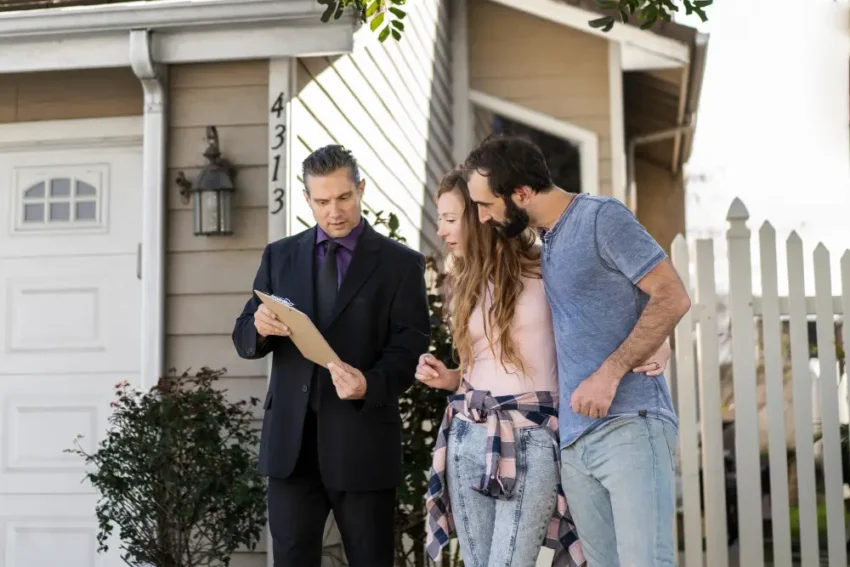
Stephanie was at the front door with the key in the lock, or rather with the key in the slot where the lock used to be, turning it in the way you turn a key when it does not fit and you are not yet willing to accept that it does not fit. The man who had driven the truck was standing beside her, and my mother was on the porch steps, and there was a woman I did not recognize sitting in the passenger seat of the truck with the window down.
The patrol car was already there. It had arrived before me, or at the same time, parked at the curb on the opposite side from my mother’s SUV with the unhurried precision of an official vehicle that has pulled over for a reason rather than an emergency. The officer was still in the car. He had not gotten out. He was watching.
I came up the driveway and stepped onto the driveway surface and stopped.
Stephanie turned at the sound of my footsteps. Her expression went through several transitions quickly: surprise, irritation, the attempt to recover the confidence she had arrived with. She said my name with the inflection of someone who had expected to be further along in a plan before I appeared.
I said hello. I said it the way you say hello when you want to establish tone rather than warm feeling, which is calmly and without particular emphasis.
My mother started talking immediately, which was her way in conflict situations, the belief that enough words produced quickly enough would establish a version of events before anyone could look too closely at the underlying facts. She said this was a family matter and we needed to handle it as a family. She said Elaine would have wanted the house to stay in the family, with someone who would be here, who would use it. She said Stephanie had already made plans.
I let her finish. This is something I have learned from years in courtrooms, that the value of letting someone finish is not just courtesy but intelligence-gathering, that people who are making arguments they know are weak tend to over-argue them, and over-argument tells you which parts of the argument they are least confident in.
She was least confident in the legal part. She kept circling back to what Elaine would have wanted and to family and to reasonableness, and she did not say deed or probate or legal ownership because she knew those words worked against her.
When she stopped I opened the folder I was carrying.
I had organized it the night before with the care I brought to case files I was preparing for court. The deed on top, my name on the transfer line, the county recorder’s stamp and date. Behind it the probate documents, the executor’s certificate, the order of distribution with the judge’s signature. Behind those the property tax receipts showing my payments for the current and previous year. Behind those the current homeowner’s insurance policy in my name.
I placed the deed on the porch railing where everyone could see it.
“This is the deed,” I said. “The house has been in my name since the probate closed fourteen months ago. Every document establishing ownership is in this folder and I have copies in three separate locations.”
Stephanie said it didn’t matter what was on paper, that Elaine had told her privately that she had always intended the house to come to her eventually, that the will didn’t reflect what Elaine actually wanted.
I had expected this argument. It was the argument people made when the documentary record was unambiguous and all they had left was claims about private conversations with a person who was no longer alive to confirm or deny them. It is also, functionally, not a legal argument.
“If you believe the will doesn’t reflect what Elaine intended,” I said, “the time to contest it was during the statutory period, which closed eleven months ago. That period has passed. The probate is closed. The deed is recorded. There is nothing legally actionable about your belief.”
My mother said I was being a lawyer about my own family, as though being a lawyer about my own family were a moral failing rather than, under the present circumstances, a straightforwardly appropriate response. I acknowledged that I was being careful about the facts. I said the facts were on my side.
The officer had gotten out of the patrol car by then and was standing on the sidewalk, not approaching, not intervening, simply visible. The presence of a uniformed officer at the edge of a situation has a particular clarifying effect on people who are relying on the other party’s uncertainty or emotional response to carry their position, because the officer’s presence signals that the situation has reached the level at which the law is literally present, and that level tends to collapse the useful ambiguity that certain strategies depend on.
The man who had driven the truck looked at the officer and then looked at Stephanie. He said her name, just her name, with a tone that meant I did not sign up for this.
Stephanie tried the key in the lock again. It did not work, which she had known it would not work, but trying it again was a way of buying time and processing what was happening.
I said, without heat and without cruelty, that the locks had been changed on Saturday and that the key she was holding no longer fit.
She turned and looked at me in a way that I recognized from childhood, the look she had given me every time something I had been given was something she believed should have been hers, the look that had been present since before Elaine died and had only intensified since. It was not a look of pure malice. It was more complicated than that, a combination of genuine grievance and entitlement and the inability to distinguish between the two. She believed, with some real feeling, that she deserved this house. She had spent fourteen months building and rebuilding the case for that belief in her own mind. Standing on the porch of a house with a key that did not fit, with a police officer on the sidewalk and her sister holding a folder full of documents that said no, she was encountering the thing that people in this situation always eventually encounter, which is that the law is indifferent to your belief about what you deserve and interested only in what you can demonstrate.
My father had arrived during the exchange, pulling up in his car, and he came up the driveway with the demeanor of someone who has been called in as a reasonable senior presence and is not yet certain what he is walking into. He looked at the folder on the porch railing. He looked at the patrol car. He looked at me.
I had not seen my father since the previous Christmas, a stilted family gathering that had been organized around a shared decision not to discuss the house and had therefore been organized around a large absence that everyone spoke around without acknowledging. My father was not a stupid man. He was a man who had made a choice, which was to support my mother’s and sister’s position without interrogating it too carefully, and that choice had served him for fourteen months because I had not forced a confrontation.
I was now forcing a confrontation, and he was reading the room.
He picked up the deed from the porch railing and read it. He read it carefully, the way he read everything, his finger tracking the lines. He turned it over. He put it down.
He said to my mother, quietly: “The deed is in her name.”
My mother said she knew that.
He said: “Then we can’t change the locks.”
My mother said they weren’t changing the locks, they were reclaiming what should have been the family’s.
He said: “We are standing in front of a police officer. Let’s not have this conversation here.”
Stephanie made one more effort. She directed it at me, pulling away from the policy argument toward the personal one, which was the move I had been anticipating because it was the one most likely to be effective and she knew it. She said she knew I didn’t actually want to live in the house, that I had my apartment, that the house was just sitting there, that Elaine would not have wanted it to become a rental. She said she remembered things about Elaine and about the house that I was erasing by turning it into an investment.
I let her finish again.
I said: “Elaine left me the house. I understand you don’t agree with her decision. I understand you think she was wrong or that you would have made a different choice. But she made the choice she made, carefully and with full capacity, and she put it in a legally binding document, and I am not going to apologize for respecting what she decided.”
I paused, and then I said the thing I had thought about saying for fourteen months.
“She knew what she was doing. She knew what this family would do if she left it ambiguous, so she didn’t leave it ambiguous. She made it as clear as she knew how to make it. Arguing with me doesn’t change what she decided. It just means you’re still arguing with her.”
Stephanie looked at me for a long moment. The expression she had was not the same one as before. Something had shifted in it, some layer of the strategy removed, and what was underneath it was closer to genuine hurt than I had expected, which made it harder to look at. There was real loss in her, real grief about the house and about Elaine, mixed in with the entitlement in a way that did not make the entitlement acceptable but did make it more human and therefore more difficult.
I did not soften the legal reality. I was not going to do that. But I said something that I meant, which was that I knew she had loved Elaine and that the loss was real.
She did not respond. She walked off the porch and went to the truck and got in the passenger side and did not look back. The man who had driven the truck was already back at the driver’s side door, the situation having exceeded what he had agreed to by a substantial margin.
My mother stood on the porch for a moment longer. She looked at my father, then at me, then at the folder of documents, then at the police officer who was still standing at the curb with the patience of someone who is very comfortable waiting. She said something I will not reproduce here because it was said in the low voice that is less about communication than about expressing that she needed the final word, and she went down the porch steps and got into her SUV.
My father picked up the deed from the porch railing and handed it back to me. He did not apologize. He did not explain. He just handed me the document that said what it said and nodded once in the way of a man who has looked at a situation and made a decision about what is and is not worth continuing, and then he walked back to his car.
The officer came up the driveway after they had all left. He was young, mid-twenties, with the professional courtesy of someone who has been trained to be useful without being presumptuous. He asked if everything was resolved. I said I believed so, at least for today. He asked if I wanted to make a formal report. I said I had the non-emergency record from yesterday and I would add to it if necessary, but that at this moment nothing had required intervention beyond presence.
He said he was glad and that I should not hesitate to call if anything further developed. I thanked him and he got in his car and left.
I stood on the porch alone.
The October afternoon had gone quiet in the way of suburban afternoons after the particular noise of the particular thing that just happened has stopped, the ordinary sounds of distance returning, a lawnmower somewhere, children on a street over, the wind moving through the oak trees that Elaine had planted years ago along the property line and that were substantially taller than she had expected them to become. I stood there and felt the specific exhaustion that follows sustained effort, the kind that is not unpleasant because it is the exhaustion of having done something that mattered and done it correctly.
I went inside.
The house had the quality it had had on Saturday, the layered presence of a life lived in it over decades, and I walked through it slowly this time, not collecting or assessing, just being in it. The kitchen with the table where I had done my homework and where Elaine had corrected my essay drafts with a red pen she bought specifically for the purpose, not unkindly but seriously, because she believed that writing well was something worth the effort. The living room with the bookshelf she had built herself when she was forty-two because she wanted it a specific height and had decided that doing it herself was more reliable than finding someone else to do it right. The back bedroom that had been mine, then mine part-time, then given over to a sewing room when I left but that still had the particular light of a room that once held a child and retains some quality of that regardless of what else it becomes.
I sat at the kitchen table for a while with a glass of water and thought about what Elaine had known when she wrote the will. She had understood my family, specifically and accurately, the way she understood most things, through close observation over a long period of time. She had known my mother’s relationship with property and my sister’s. She had known that ambiguity would be exploited and that clarity was the only protection I would have once she was gone. She had made the will the way she made most things: carefully, with the long view, leaving as little to chance as she could manage.
She had also taught me how to hold my ground without making a scene, which was the tool I had used all weekend: the documentation gathered silently, the locksmith called without announcement, the police notified in advance rather than reactively, the confrontation met with paper rather than volume. I had not shouted. I had not threatened. I had not needed to be cruel, though I had been firm, and firmness and cruelty are not the same thing even when the person on the receiving end of the firmness would prefer they were.
She had been right to teach me. The situation had required exactly that combination of preparation and composure and willingness to let the legal record speak before I said anything at all.
I called Margaret Osei that evening and told her what had happened.
“And they left?” she asked.
“They left.”
“Without formal trespass citation, without police report filed.”
“Without either of those things, yes.”
She was quiet for a moment. “Then it went about as well as it could have gone,” she said. “You did it right.”
I thanked her. She asked if I thought they would try again and I said I did not know, that my sister’s position was driven by genuine belief as much as strategy, which made it harder to predict than pure calculation would have been. Margaret said that if anything further happened I should document it immediately and that the non-emergency record I had established provided a useful foundation.
I said I knew. She said she was confident I did. We said goodbye.
That night I slept at the house for the first time since Elaine died.
I had not planned to stay. I had brought nothing for the night, no overnight bag, no change of clothes, and I lay down on the couch in the living room in the clothes I was wearing with the old quilt from the hall closet pulled over me, the one Elaine had owned so long it had softened past the point where fabric had a texture and become instead just warmth. The house settled around me in the dark with the sounds it had always made, the furnace cycling on, the oak trees moving against the side of the house in the wind, the porch boards somewhere shifting with the temperature change.
I thought about the blue shutters we had painted when I was twelve. I thought about the recipe cards with their marginal notes, and the letters in the wooden box, and the photo albums I had carried to my car on Saturday morning. I thought about a woman who had understood that love, real and durable love, was expressed most reliably through the unglamorous work of preparation: the will drafted carefully, the deed recorded properly, the file box maintained, the lesson taught repeatedly about how to stand in a difficult room without losing yourself in it.
She had given me the house and she had given me the capacity to keep it, and the second gift was the larger one.
My phone was quiet. Stephanie did not text. My mother did not call. My father did not email. The silence was the appropriate silence of people who have encountered something they cannot argue with, which is a clean legal record and a person who knows what it says and is not afraid to say so in the presence of anyone who needs to hear it.
In the morning I drove to the hardware store before it opened and sat in the parking lot with a coffee from the drive-through and made a list. Paint for the porch trim. New weatherstripping for the back door. A plumber to look at the downstairs bathroom faucet that had dripped for as long as I could remember. A contractor’s opinion on the kitchen renovation I had been thinking about, the one that would open the wall between the kitchen and the small room behind it the way Elaine had always said she wished someone would.
She had left me the house. I was going to take care of it, which meant I was going to take care of it the way she had taken care of everything: completely, without fuss, with the long view in mind.
The hardware store opened at eight. I went inside.